Trade-In Value in Ontario: What the Appraiser Looks At, What to Fix First and How HST Works

By Navin Kotecha, The Car Doctor
Published
A trade-in number is not a guess. The appraiser starts from what your car would fetch wholesale, then takes off whatever it will cost to get it ready for the next owner. Kilometres, condition, accident history, trim and how much local buyers want that model move it up or down. You control more of that than most people think, and in Ontario the trade also lowers the HST on the vehicle you are buying.
Here is how the number gets built, what is worth doing before you drive in, and when selling it yourself makes more sense. Everything below is checked against OMVIC, Ontario's dealer regulator, and at least one other independent source.
How does a dealer work out your trade-in value?
Dealers pay wholesale for a trade, and OMVIC says plainly that this can be less than you might get selling on your own. The difference is not free money for the store. Before your car can sit on a used lot it has to be reconditioned, advertised, shown and sold, with the paperwork done, and AutoTrader.ca lists those same jobs as the reason for the gap. So the appraiser's real question is simple: what will it take to make this car ready to sell, and what will it sell for once it is?
That is why reconditioning matters so much. Worn tires, tired brakes, a cracked windshield or a warning light on the dash each turn into a cost the dealer subtracts. At Golden Mile Chrysler, trade-ins that pass inspection can end up on our used cars lot, so we look at a trade the same way any next buyer would.
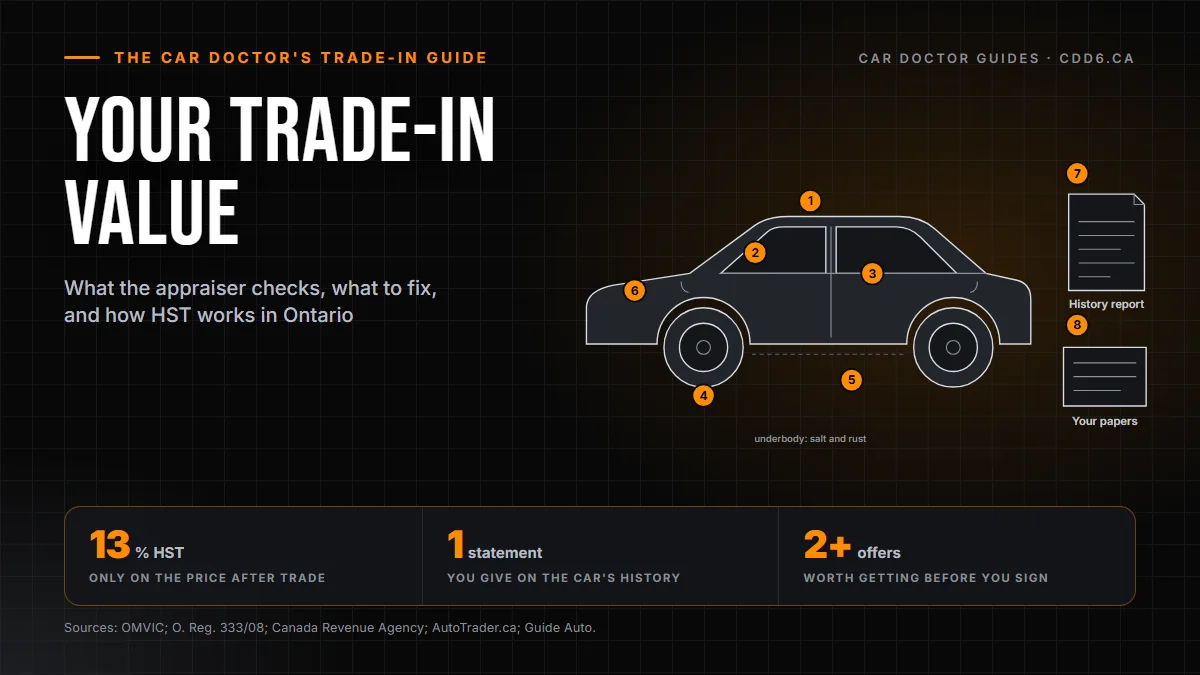
Where a trade-in appraiser looks
- Body and paintDents, scratches, mismatched panels and signs of accident repair.
- GlassChips and cracks in the windshield and windows.
- Interior and odometerSeat wear, stains, smells, working electronics, and the kilometres.
- Tires and brakesTread left, matching tires, and how much brake life remains.
- UnderneathRust from road salt, leaks and damage underneath the car.
- Under the hoodLeaks, noises and any dash warning lights.
- History reportReported accidents and damage, such as a CARFAX Canada report.
- Your paperworkOwnership, service records, every key, and your loan details if you owe money.
The numbers follow a typical walk-around; your appraiser may take them in a different order. Simplified drawing; the layout differs between vehicles.
Source: AutoTrader.ca trade-in guide, AutoTrader.ca on trade-in value, AAA Club Alliance: preparing your car for trade-in, Guide Auto and OMVIC.
What moves the number up or down
The six things that matter most
Kilometres
Lower kilometres for the car's age normally means a higher value.
Condition
Repairs the car needs come straight off the offer; recent work like new tires or brakes can add to it.
History
Reported accidents and damage show up on a history report and pull the value down.
Trim and options
Trim level and factory options can move the number more than many owners expect.
Local demand
Models that sell quickly in your area are worth more to a dealer, and colour plays a part too.
Rust
Years of salted roads in Ontario take a toll; visible corrosion lowers the price.
OMVIC names popularity, condition, mileage, colour and location as factors, and Canadian Black Book builds its trade-in estimates from make, model, year, trim, mileage, condition, optional equipment and the local market. On rust, the Automobile Protection Association warns that corrosion in central and eastern Canada usually means lower resale value by a car's seventh or eighth year. If you drive the 401 and the DVP all winter, rinse the salt off the underside through the season. It costs little and it shows at appraisal time.
What is worth fixing before the appraisal, and what is not
The rule of thumb from every source we checked: do the cheap, obvious things and skip the big jobs, because a large repair rarely comes back to you in full on the offer. AAA Club Alliance says to leave a major repair to the dealer, and AutoTrader.ca suggests asking the appraiser whether a fix would raise the offer by more than it costs before you book it.
| Job | Verdict | Why |
|---|---|---|
| Wash it, vacuum it, clean the interior and take out your things | Worth doing | A clean car signals it was looked after, and it costs you an afternoon |
| Replace burnt-out bulbs and worn wiper blades | Worth doing | Cheap fixes the appraiser would otherwise take off the offer |
| Touch up small paint chips | Worth doing | Inexpensive, and it helps a little |
| Dash warning light on | Have it checked | A lit warning light lowers the offer; know what it means before you go in |
| Service records, every key, spare wheels and mats | Bring them | Records back up your number, and extras help the car stand out |
| Major engine, transmission or body repair | Usually skip | Rarely recovered in full; ask the appraiser before you book it |
Source: From AutoTrader.ca, AutoTrader.ca on trade-in value, Guide Auto and AAA Club Alliance.
Two more points. Tell the appraiser about recent work, such as new tires or a brake job, because OMVIC notes it can raise the value by cutting the dealer's reconditioning bill. And decide before the appraisal which extras stay with the car, like a roof rack, a set of winter tires on rims or all-weather mats, and get that written into the deal.
Get your car ready in the week before
Clean it inside and out
A clean car looks looked after, and you will spot the small marks worth touching up.
Fix the small stuff
Bulbs, wipers, paint chips. Ask before paying for anything bigger.
Collect the paperwork
Ownership, service records and your lender's payout figure if you owe money.
Find every key
Bring all of them, along with the owner's manual.
Clear your data
Garage door codes, paired phones, saved addresses. Our data wipe checklist has the steps.
Know your number
Check a free estimate and compare listings for the same year, trim and kilometres.
Do you pay HST on the full price when you trade in?
No. When you trade in a personal vehicle at an Ontario dealer, the 13 per cent HST applies to the price that is left after the dealer takes off your trade-in allowance, not to the full price of the vehicle you are buying. OMVIC and AutoTrader.ca both describe it this way, and it follows the federal net-amount rule for goods taken in trade from someone who does not charge GST/HST, set out by the Canada Revenue Agency and explained by the tax law firm Rotfleisch & Samulovitch.
That tax saving is part of what a trade-in is worth to you, so count it when you compare a dealer's offer with a private-sale price. If the vehicle is registered to a business that collects GST/HST, the rules are different; ask your accountant.
Trading in a car you still owe money on
You can trade in a financed car. Call your lender yourself for the payout figure, which can differ from the balance on your last statement, and check that the same number appears in your contract. OMVIC says the dealer must clear the lien on your trade as soon as possible. Afterwards, confirm with your lender that the loan was paid off, a step the Vehicle Sales Authority of BC also recommends. If a payment still comes out of your account, contact the dealer and the lender, then OMVIC. If any dealer offers to keep making your old monthly payments instead of paying the loan out, OMVIC treats that as a serious risk.
If you owe more than the car is worth, that is negative equity. The Financial Consumer Agency of Canada and OMVIC both warn that the unpaid amount can be added to your next loan, so you go on paying interest for a vehicle that is already gone. If that is your situation, ask to see the trade value, the payout and the new loan amount as separate lines, and read our lease versus finance page before you choose a term.
What paperwork does a trade-in need in Ontario?
Bring your ownership permit, every key, your service records and, if you owe money, your loan account details. Expect to answer questions about the car's past. Ontario's dealer regulation, O. Reg. 333/08, has the dealer get a statement from you about the car's history, and OMVIC explains that this covers things like past accidents, because the dealer has to disclose that history to whoever buys the car next. Answer it honestly; reported damage can show up on a history report anyway. Our guide to reading a VIN shows where to find the number a history report is run on.
The Used Vehicle Information Package (UVIP) is a private-sale document. Ontario requires a private seller to hand one to the buyer, and someone buying from a registered dealer does not need one. For a trade-in, ask the dealer which papers they want from you. Selling privately instead? Our Ontario seller checklist walks through the UVIP, safety certificate, plates and payment.
Trade-in or private sale: which pays you more?
| What matters | Trade-in | Private sale |
|---|---|---|
| Price you get | Wholesale value, usually lower | Often higher, if you find the right buyer |
| Time and effort | Done as part of buying your next vehicle | Listing, calls, test drives and no-shows |
| HST on your next vehicle | Charged only on the price after your trade | No reduction; you pay HST on the full price at the dealer |
| Getting paid | Handled in the deal | You have to make sure the payment is genuine |
| Paperwork | Ownership transfer and loan payout are usually handled by the dealer | UVIP, bill of sale, permit transfer and plates are on you |
Source: From OMVIC, AutoTrader.ca on trade-in tax benefits, AutoTrader.ca on trading in and ontario.ca.
The honest answer is that a private sale can put more in your pocket, and a trade-in saves you time, risk and some tax. Work out the private price you could realistically get, subtract the tax saving and the hassle, and compare that with the dealer's offer. Get at least one other appraisal or a free Canadian Black Book estimate so you know where the number sits, and remember that OMVIC says trade-in value can be negotiated and differs from dealer to dealer.
Thinking about trading in toward something new or used? Come see us at Golden Mile Chrysler on Eglinton, at the Scarborough border, or get in touch with questions about your trade.
Trade-In Value in Ontario: Common Questions
Why is my trade-in offer lower than what similar cars are listed for?
Listings show retail asking prices. A dealer pays wholesale for a trade because it still has to inspect, recondition, advertise and resell the car. OMVIC and AutoTrader.ca both note that a trade-in usually brings less than a private sale, in exchange for speed, security and the HST saving on your next vehicle.
Do I pay HST on the full price of my new car if I trade in?
No. For a personal vehicle traded in at an Ontario dealer, HST is charged on the price left after your trade-in allowance is deducted. OMVIC, AutoTrader.ca and the Canada Revenue Agency's rule for goods taken in trade all describe it this way. Business vehicles registered for GST/HST are treated differently.
Should I fix my car before trading it in?
Do the cheap things: clean it, replace bulbs and wipers, touch up small chips and have warning lights checked. Skip major repairs unless the appraiser confirms the fix would raise the offer by more than it costs.
Can I trade in a car I still owe money on?
Yes. Get the payout figure from your lender and check it against the contract. The dealer must clear the lien promptly, and you should confirm with your lender afterwards that the loan is closed. If you owe more than the car is worth, that negative equity can be added to your next loan, so ask to see it as its own line.
Do I need a Used Vehicle Information Package to trade in my car?
The UVIP is built for private sales: Ontario requires a private seller to give one to the buyer. When you trade in at a dealer, bring your ownership, keys, service records and loan details, and ask the dealer which papers it needs. You will also be asked for a statement about the car's history, such as past accidents.
This Month's Deals at Golden Mile Chrysler
November 2026 · All-in weekly finance pricing — tap a deal for full details.
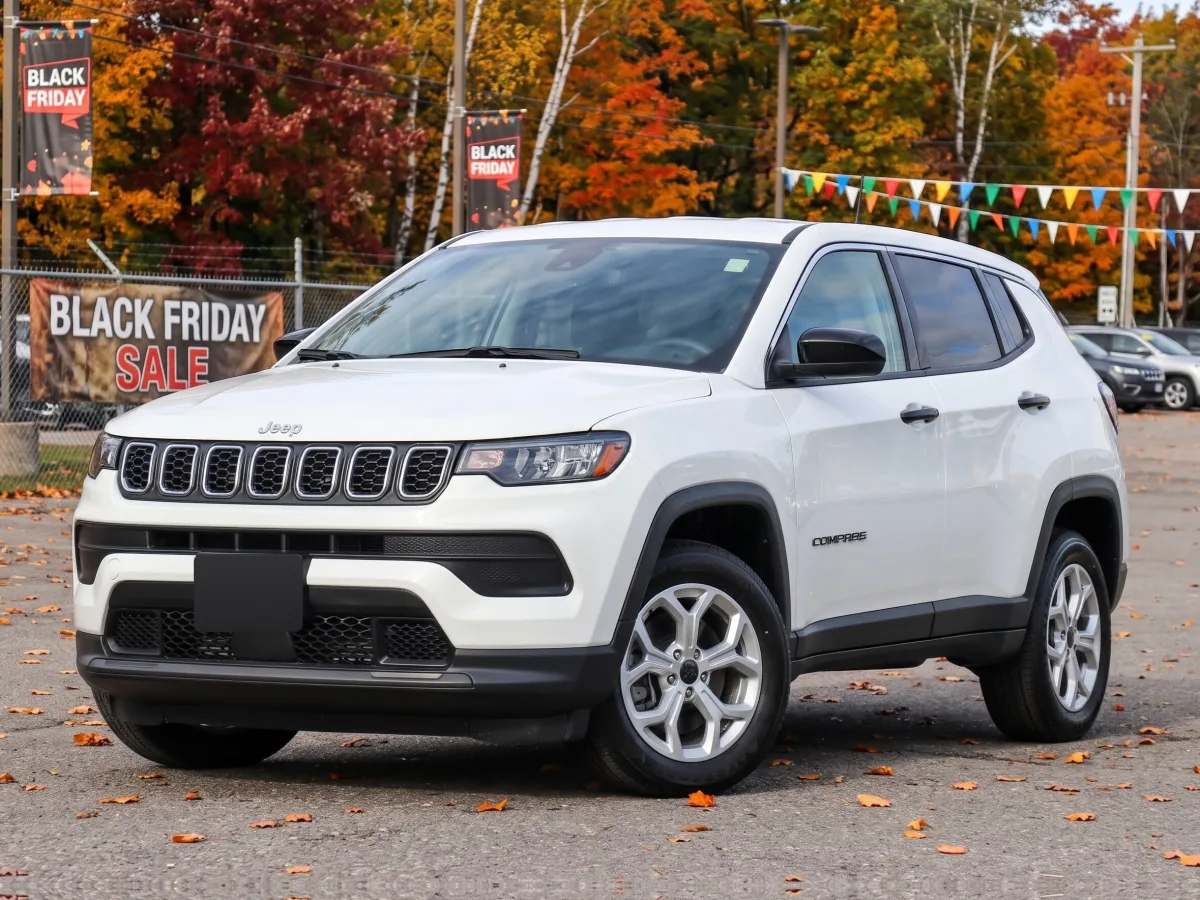
2026 Jeep Compass Sport 4x4 DEMO
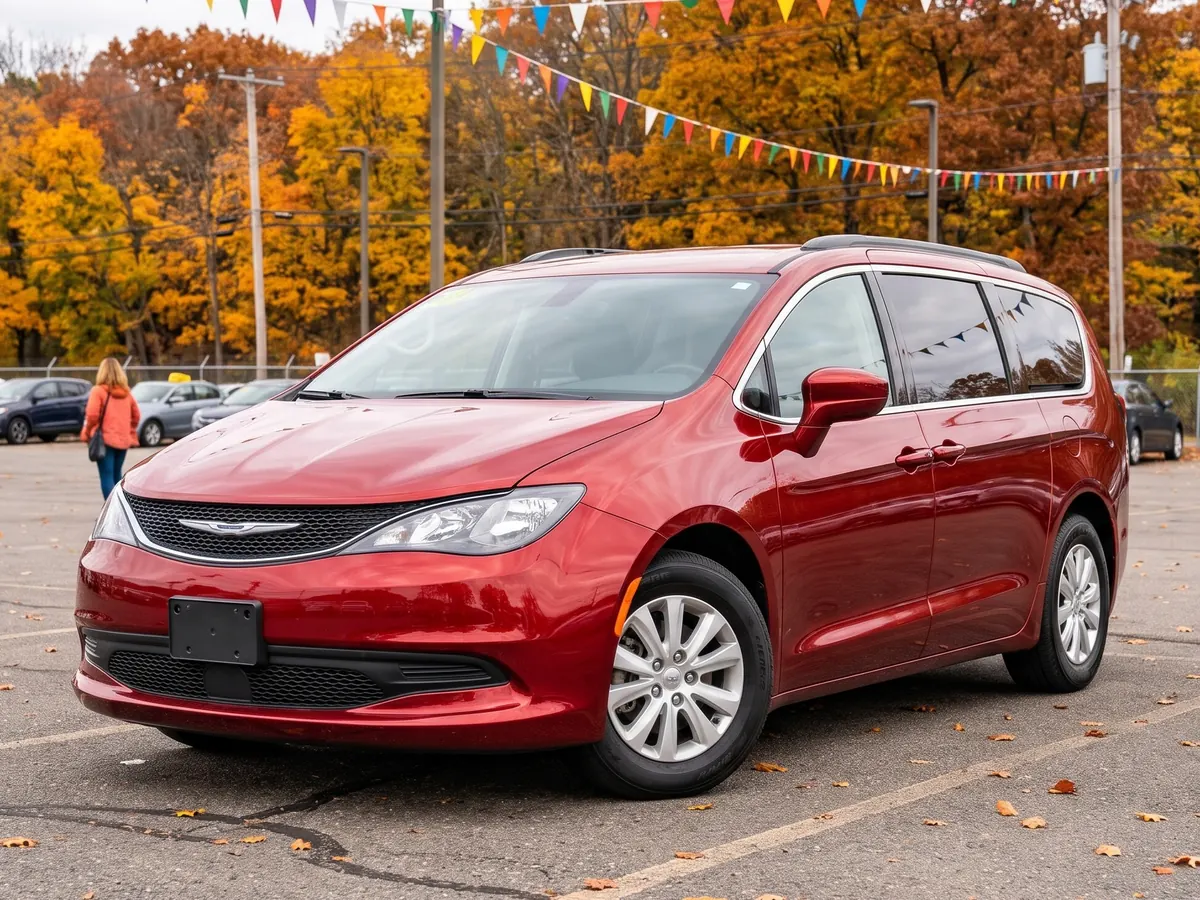
2026 Chrysler Grand Caravan SXT DEMO
A note on this month's offers. The CDD6 program is running finance offers only for November 2026 — there are no advertised lease specials in this cycle. Leasing remains available on everything Golden Mile Chrysler stocks; the terms are simply quoted directly rather than advertised as a special. Call 437-524-1747 and we will price it either way so you can compare.
Advertised weekly prices are all-in (freight, PDI, admin & OMVIC fees included); only HST and licensing are extra. On approved credit (OAC). Not all lessees or buyers will qualify — see dealer for eligibility. Vehicles subject to prior sale; see each deal page for full disclosure. E.&O.E. Call 437-524-1747.
See all of this month's deals Black Friday Used Car Sale: on until November 30, 2026 →
Talk to the Car Doctor
Straight answers, no games, no runaround. The line is open.
437-524-1747