Fuel and Engine Guides from The Car Doctor
What goes in the tank and what happens after it. These guides explain the gasoline grades at Canadian pumps, how a diesel engine differs from a gas engine, what a catalytic converter does, how to convert a US fuel economy number into the litres per 100 km Canada uses, and the quick way to tell which side your fuel door is on.
Shopping for a truck? Start with the RAM 1500 or the F-150 vs RAM 1500 comparison.
-
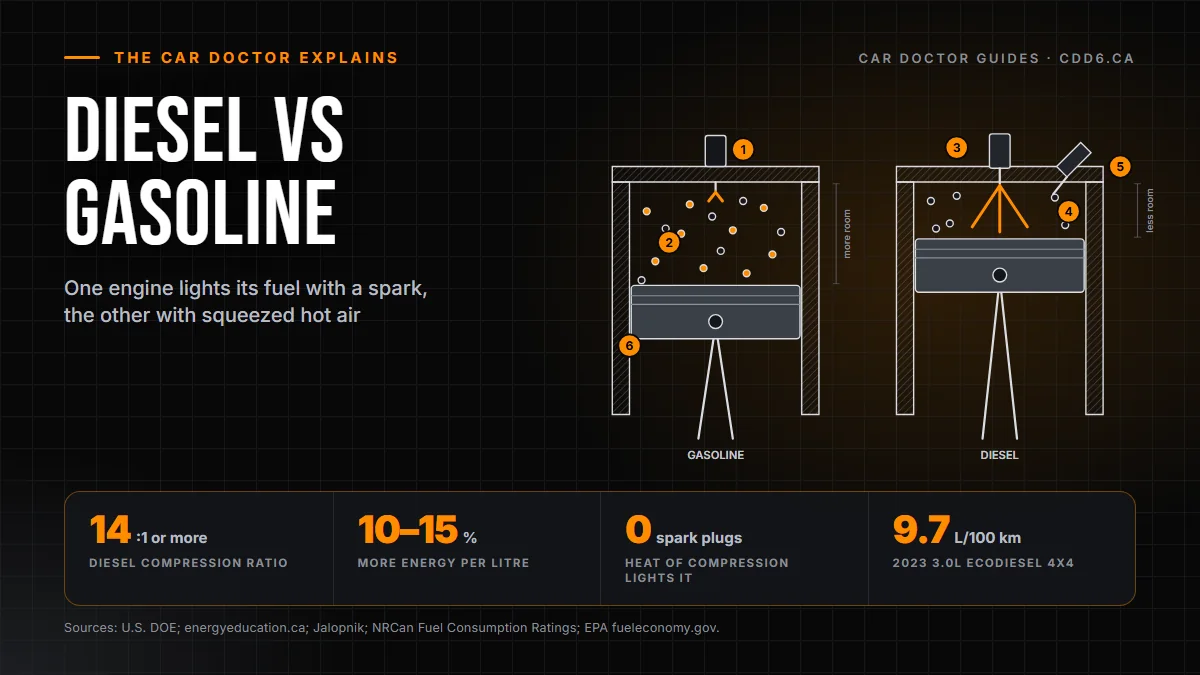
How a Diesel Engine Works vs a Gasoline Engine
A gasoline engine fires its fuel with a spark plug. A diesel squeezes air until it is hot enough to light the fuel on its own. That one difference explains the torque, the fuel economy, the glow plugs on a cold Toronto morning, and the extra fluid a modern diesel needs.
-
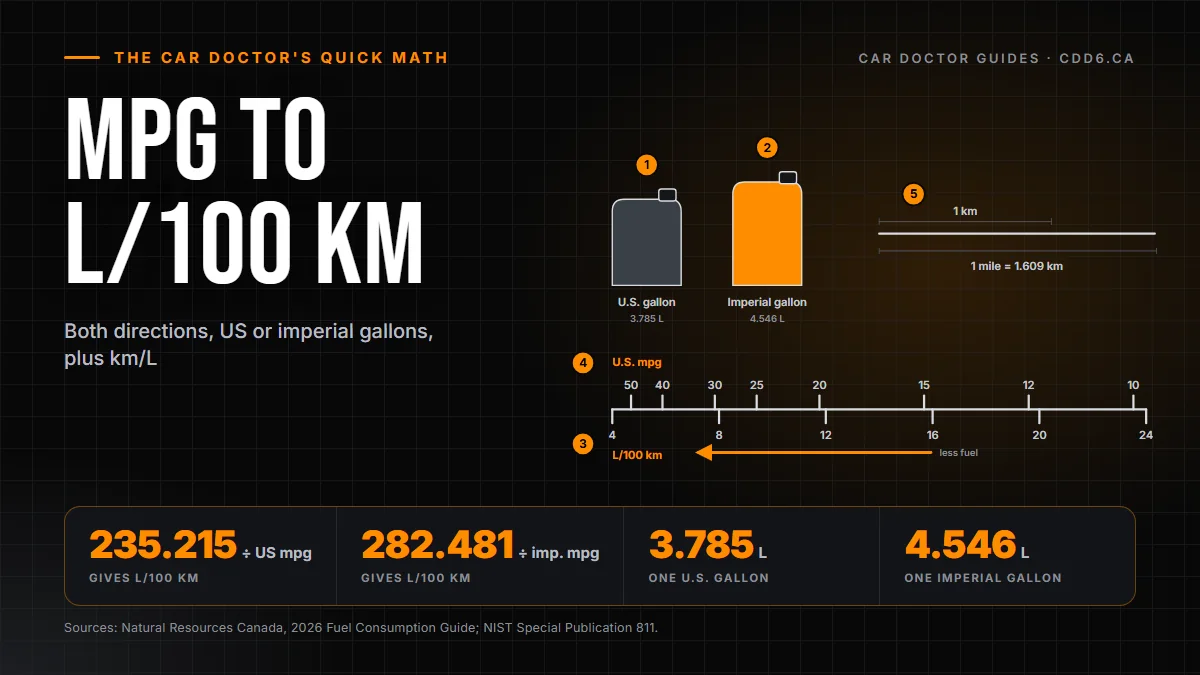
How to Convert MPG to L/100 km (and km/L)
Divide 235.215 by US mpg to get L/100 km, or 282.481 if the mpg is imperial. Here are both formulas, km/L, a full conversion table and worked examples, checked against Natural Resources Canada and NIST.
-
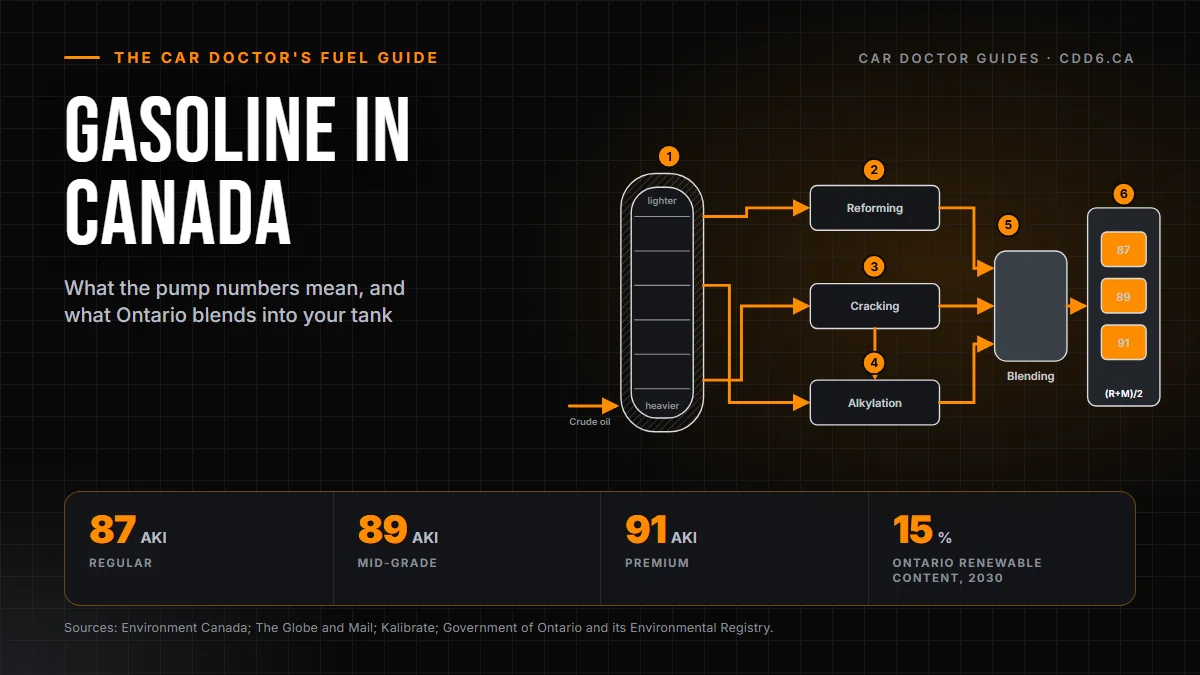
Types of Gasoline in Canada: Octane, Ethanol and Refining
Canadian pumps sell 87, 89 and 91 octane, with 93-plus at some stations. Here is what that number measures, when your engine really needs premium, how much renewable content Ontario requires in gas through 2030, and how a refinery turns crude into the fuel in your tank.
-
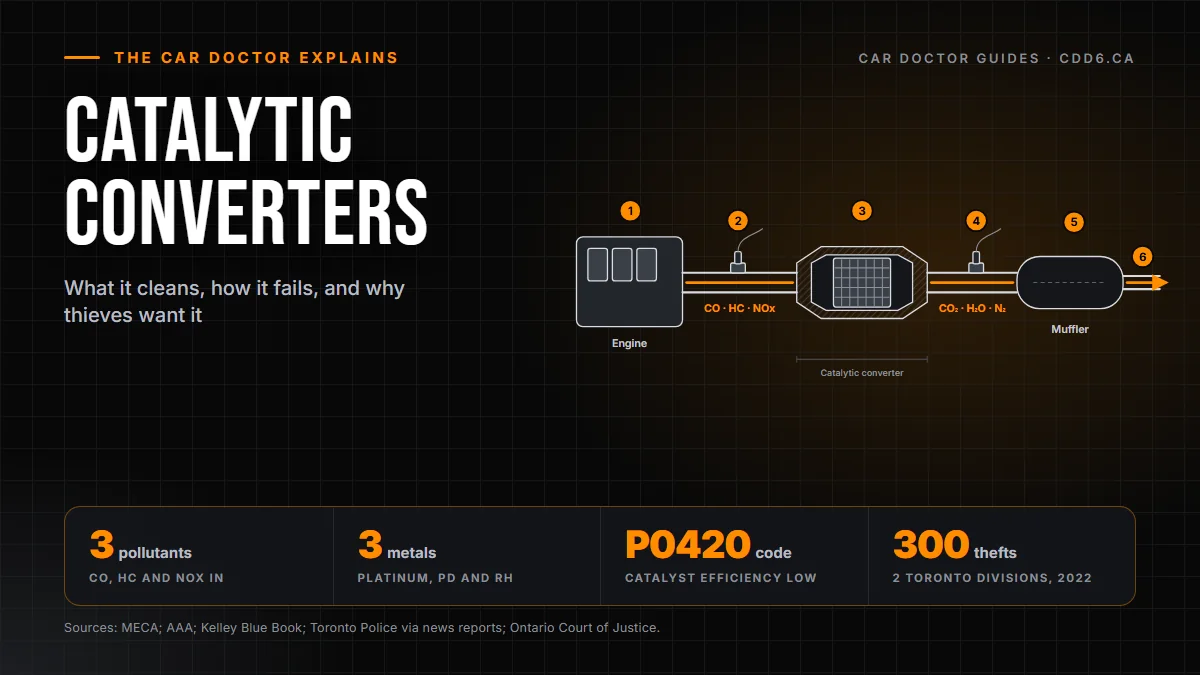
What Is a Catalytic Converter? What It Does and Why It Fails
Your catalytic converter turns three harmful exhaust gases into far less harmful ones using platinum, palladium and rhodium. Here is how it works, the signs it is failing, what P0420 means, and why thieves in Toronto go after it.
-
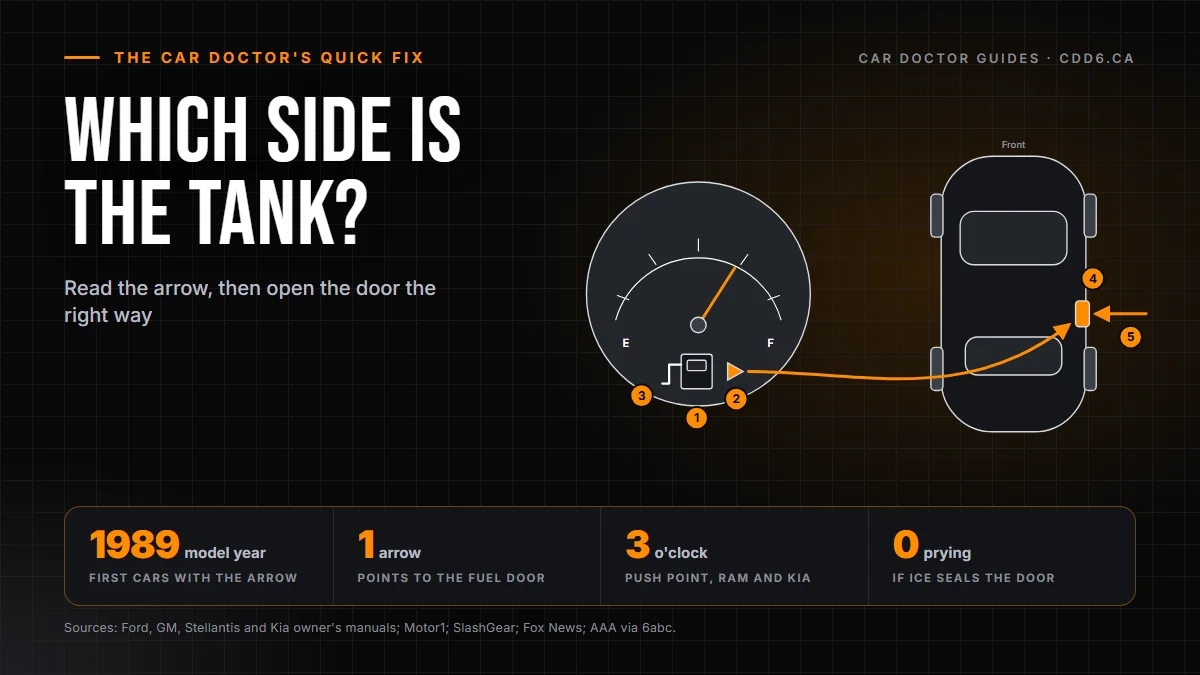
Which Side Is the Gas Tank On? Read the Arrow on Your Gauge
Look at the fuel gauge: the little arrow or triangle next to the pump icon points to the fuel door's side. Here is why the hose on the icon can fool you, and how to open a fuel door that has no button or is iced shut.