
How to Change a Car Battery Safely, Step by Step

By Navin Kotecha, The Car Doctor
Published
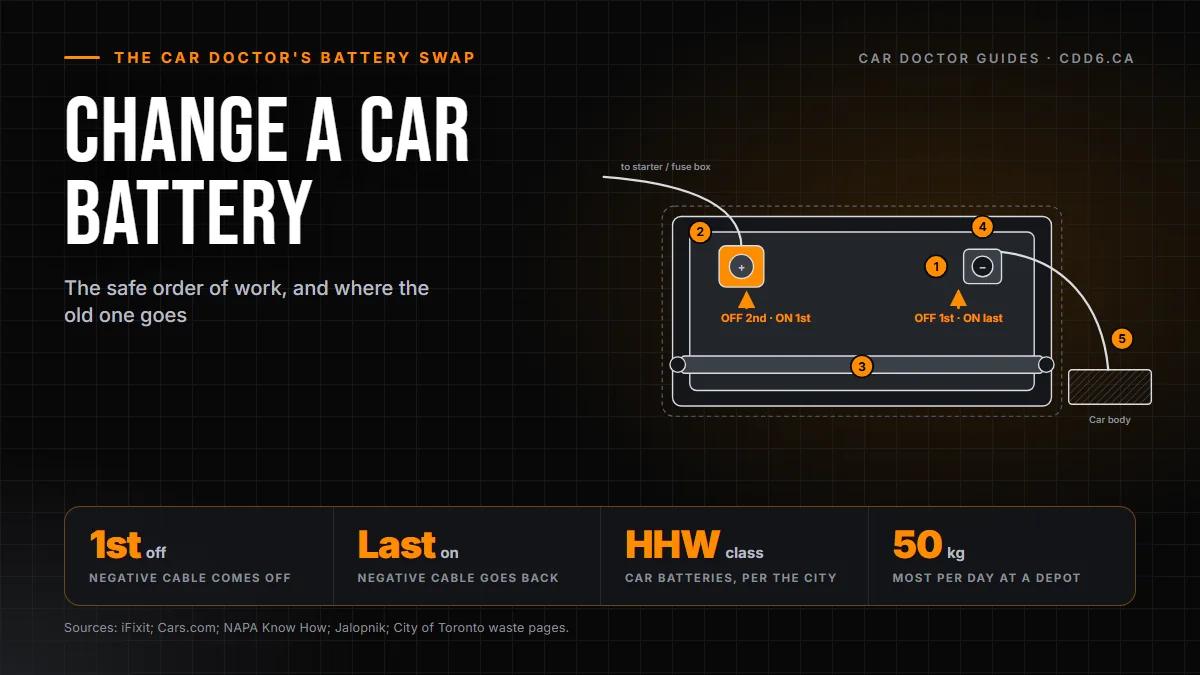
To change a car battery: switch the vehicle off, put on gloves and eye protection, disconnect the negative cable first and then the positive, remove the hold-down and lift the battery out. Clean the cable clamps, fit the new battery, refit the hold-down, then connect the positive cable first and the negative last. Some newer vehicles also need it registered.
On many vehicles that is a short job in the driveway. On others it is a shop job, and I will tell you how to spot the difference. Before you buy the replacement, make sure it is the right type, group size and CCA for your vehicle: our guide to car battery specs explains each one. And as always, read the battery section of your owner's manual first. What follows is general guidance, not a procedure for a specific model.
The swap at a glance
Gear up and park
Put on eye protection and gloves, set the parking brake, switch the ignition off and keep the key away from the car.
Negative cable off first
The negative side is grounded to the body, so taking it off first means a slipping wrench cannot cause a short.
Positive off, then the hold-down
Disconnect the positive cable, then remove the hold-down before you lift the battery out.
Clean and fit the new one
Brush any corrosion off the cable clamps, set the new battery in and refit the hold-down.
Positive on first, negative last
Reconnect in the reverse order, then reset the clock and radio presets if you did not use a memory saver.
Never in the garbage
The City of Toronto treats car batteries as household hazardous waste; take the old one to a depot, and many parts stores take them too.
What tools do I need to change a car battery?
Not much. iFixit and Cars.com both list a socket set or wrench for the cable clamps and the hold-down, gloves, and a wire or terminal brush for cleaning corrosion. Cars.com adds safety glasses, because batteries contain acid. A memory saver is optional but handy if you want to keep your settings.
| Item | What it is for |
|---|---|
| Socket set or wrench | Loosening the cable clamps and the hold-down |
| Gloves and eye protection | Keeping battery acid and corrosion off your skin and out of your eyes |
| Wire or terminal brush | Scrubbing corrosion off the cable clamps |
| Memory saver (optional) | Keeping power to the vehicle's memory so presets and settings survive |
Source: iFixit, car and truck battery replacement; Cars.com, how to change a car battery; NAPA Know How.
Will I lose my radio and settings?
Probably some of them. Cutting power can wipe the clock, radio presets and memory settings such as seat positions, and iFixit adds that other electronics can lose their settings too. A memory saver avoids that. Cars.com prefers the type that plugs into the OBD II port under the dashboard, since many 12-volt power outlets go dead when the ignition is off. Without one, plan a few minutes afterwards to reset the clock and presets.
Step by step: how to replace the battery
Which clamp comes off first, and why
- Negative clampComes off first and goes back on last.
- Positive clampComes off second and goes back on first.
- Hold-downRemove it before lifting the battery out, and refit it once the new battery is in.
- Clamp contact surfacesClean any corrosion off the inside of the clamps with a wire or terminal brush.
- Ground to the bodyThe negative cable is grounded to the car body, which is why it is disconnected first: a wrench that touches metal while on the positive post can no longer short.
Battery placement varies: some sit in the trunk or behind panels, and your manual shows where. Simplified drawing; the layout differs between vehicles.
Source: Order of work from Cars.com, NAPA Know How, iFixit and Jalopnik.
| Step | What to do | Why |
|---|---|---|
| 1. Prepare | Park, set the parking brake, turn the ignition off and keep the key away from the car. Put on gloves and eye protection | Nothing should be powered up while you work, and batteries hold acid |
| 2. Find the battery | Look under the hood first; if it is not there, the manual will show where it is | Some vehicles keep it in the trunk or behind panels |
| 3. Negative cable off first | Loosen and remove the negative (black, −) cable, then the positive (red, +) | The negative side is grounded to the body, so a wrench that slips on the positive post cannot short against metal |
| 4. Remove the hold-down | Take off the clamp, bar or bracket that secures the battery, then lift it out | It is bolted down so it cannot move while you drive |
| 5. Clean the clamps | Brush the corrosion off the cable clamps | Clean, snug connections carry current properly |
| 6. Fit the new battery | Set it in the tray and refit the hold-down | A loose battery can shift and damage itself or the cables |
| 7. Positive on first, negative last | Connect and tighten the positive cable, then the negative | The reverse of removal, for the same short-circuit reason |
| 8. Finish up | Unplug the memory saver if you used one, then reset anything that was lost, such as the clock | So the vehicle is back to normal before you drive off |
Source: iFixit; Cars.com; NAPA Know How; Jalopnik, which terminal to disconnect first.
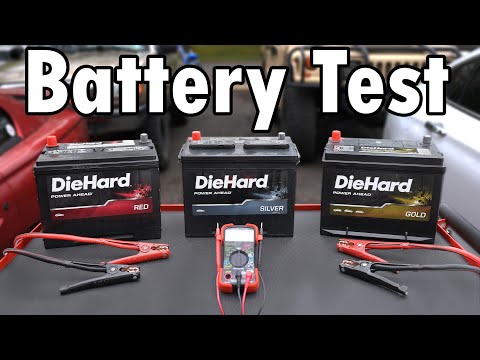
The one rule people get backwards is the cable order. Every source I checked agrees: negative off first, negative back on last. Jalopnik explains why. The negative cable is bonded to the vehicle's frame and body, so once it is off, touching metal with your wrench while you work on the positive post does no harm. Connect the negative first on the way back and you lose that protection.
Does a new battery need to be registered?
On some vehicles, yes. Many newer models use a battery sensor and a battery management system that tracks the battery's age and adjusts charging to suit. Battery maker Varta and test-equipment maker Midtronics both describe makes where the new battery has to be registered with a diagnostic tool, so the system stops charging it like the worn-out one. Both list BMW, Audi and Volkswagen among them. Skip it and, according to both, start-stop may stop working properly, and Midtronics adds that charging can be off enough to shorten the new battery's life.
When should I let a pro change the battery?
My advice: hand it over if any of these apply. The battery sits in the trunk or behind trim, and reaching it means taking parts out; Cars.com says those jobs may be best left to a shop. Your vehicle needs the new battery registered and you do not own a scan tool that supports it. The vehicle has start-stop and you are not sure whether it needs an EFB or AGM battery. Or you are simply not comfortable working near a battery.
Where do I recycle the old battery in Toronto?
Not in the garbage. The City of Toronto lists car batteries as household hazardous waste, which must stay out of the garbage and every bin. Residents can drop them at a City Drop-Off Depot that accepts hazardous waste, free for residential loads up to 50 kilograms or litres a day. Many auto parts stores also take old batteries back, according to NAPA and iFixit. Outside Toronto, check your own municipality's hazardous waste program.
| Option | How it works |
|---|---|
| City Drop-Off Depot | Bring it to a depot that accepts household hazardous waste; free for residents, up to 50 kg or 50 L a day |
| Store that sells batteries | Many auto parts stores accept old batteries for recycling |
Source: City of Toronto household hazardous waste and Drop-Off Depot accepted items; store take-back from NAPA Know How and iFixit.
Prefer to skip all of it? Our service team at Golden Mile Chrysler can test the battery and replace it for you. Shopping for something newer instead? Every CDD6 deal comes with the lifetime oil change*, a gas card and two years of free tire storage. See this month's deals.
Changing a Car Battery: Common Questions
Which battery cable do I disconnect first?
The negative (black) cable comes off first and goes back on last. The negative side is grounded to the vehicle's body, so removing it first means a wrench touching metal while you loosen the positive cable will not cause a short.
Do I need special tools to change a car battery?
Usually not. A socket set or wrench for the clamps and hold-down, gloves, eye protection and a wire brush for corrosion cover most vehicles. Vehicles that need the new battery registered also need a scan tool that supports it.
Will changing my battery reset my car's settings?
It can. Disconnecting the battery may erase the clock, radio presets and memory settings such as seat positions. A memory saver plugged into the OBD II port keeps them, and many 12-volt outlets switch off with the ignition, so they are less reliable for this.
Does my car need the new battery registered?
Some do. Vehicles whose battery management system tracks battery age, including many BMW, Audi and Volkswagen models, need the new battery registered with a diagnostic tool. Without it, start-stop may not work properly. Your owner's manual or dealer can confirm.
Can I change a battery that is in the trunk?
It depends on how much has to come out to reach it. Some vehicles keep the battery in the trunk or behind panels, and if reaching it means removing components, a shop is often the better choice. Check your owner's manual for the location.
How do I get rid of an old car battery in Toronto?
The City of Toronto classes car batteries as household hazardous waste, so they cannot go in the garbage. Take it to a City Drop-Off Depot that accepts hazardous waste, or return it to one of the many stores that collect old batteries.
Talk to the Car Doctor
Straight answers, no games, no runaround. The line is open.
437-524-1747