
Block Heaters in Toronto: Do You Need One, When to Plug In and for How Long

By Navin Kotecha, The Car Doctor
Published
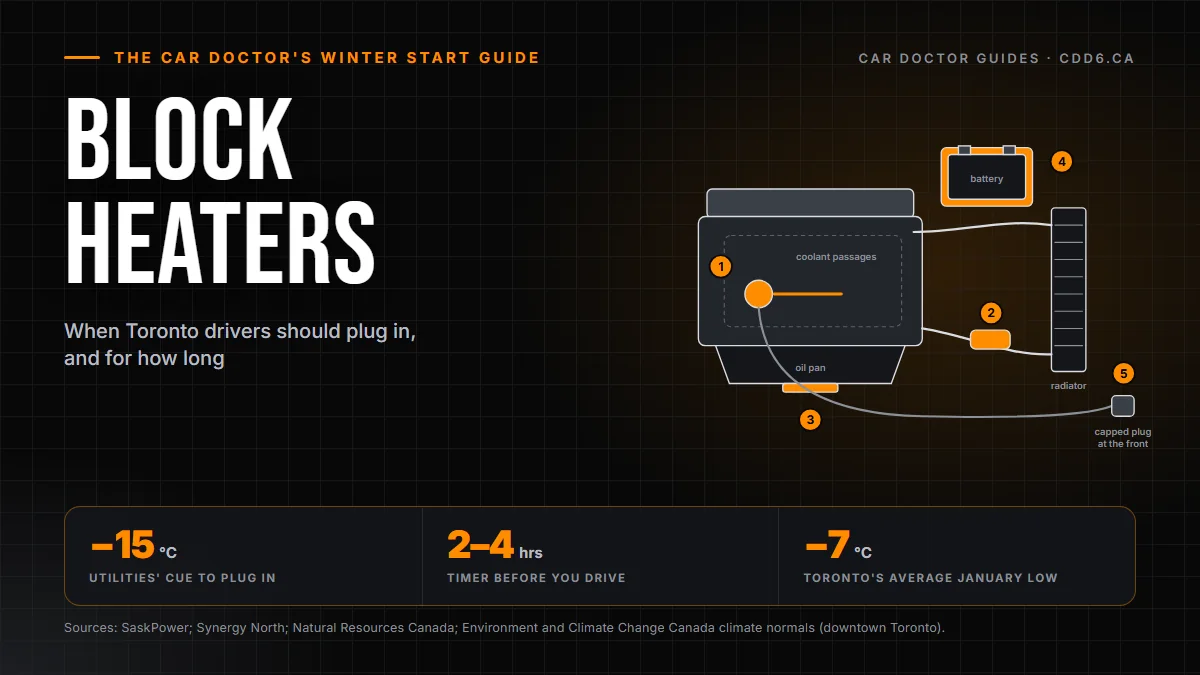
A block heater is a small electric element that warms the coolant in your engine, and the warm coolant in turn warms the block and the oil. The payoff is an engine that starts more easily and gets up to temperature sooner. Two Canadian power utilities, SaskPower and Synergy North, use −15 °C as the point to start plugging in, and a timer that switches on two to four hours before you leave is plenty. Plugging in all night buys you nothing extra.
In Toronto, −15 °C is a cold-snap number, not an everyday one. Below is what the heater does, what Canadian sources say about timing (they do not all agree), what Environment Canada's records show about our winters, and how to plug in without wrecking a cord. For the rest of your winter prep, see our guide to winter tires in Ontario.
What does a block heater actually do?
It runs on household current from an ordinary outlet. The element heats the coolant, the coolant carries that heat through the engine block, and the block warms the oil, as the Citizens Environmental Alliance and SaskPower both describe it. Cold makes oil thick, and thick oil makes an engine harder to turn over, so a pre-warmed engine cranks with less effort and reaches its normal running temperature faster.
That shorter warm-up matters for fuel too. A cold engine runs on a richer fuel mixture until it warms up, and Natural Resources Canada says a block heater cuts that rich phase short, which lowers both fuel use and emissions. NRCan has put the gain at up to 10 per cent better fuel economy at −20 °C, a figure repeated by Global News and the Citizens Environmental Alliance.
What you get from plugging in
Easier starts
Warm coolant and oil mean the engine turns over with less effort on a frozen morning.
Faster warm-up
The engine reaches its normal running temperature sooner after you start it.
Less fuel at warm-up
A shorter fuel-rich warm-up means less fuel burned and fewer emissions, says NRCan.
Heat sooner
With the coolant already warm, the cabin heats up sooner after you start.
At what temperature should you plug in?
The clearest cue comes from two utilities that hand out block heater timers. SaskPower tells customers to set the timer once it drops below −15 °C, and Synergy North, the Thunder Bay utility, gives the same −15 °C mark. Your owner's manual has the last word, especially on a diesel; our diesel vs gasoline guide explains why diesels are fussier about cold starts.
How long should you plug in a block heater?
Here the sources split, and it is worth saying so plainly. NRCan recommends a timer that switches the heater on two hours before you start the engine, and the Citizens Environmental Alliance gives the same two hours. SaskPower and Synergy North both say four hours. Where they agree is the part that saves you money: nobody recommends plugging in all night.
| Source | When to plug in | How long before you drive |
|---|---|---|
| Natural Resources Canada | No temperature given | Timer on 2 hours before you start |
| Citizens Environmental Alliance | No temperature given | Timer on 2 hours before you drive |
| SaskPower | Below −15 °C | 4 hours |
| Synergy North | At −15 °C | 4 hours |
| University of Saskatchewan tests | Not stated | A 4-hour preheat matched leaving it plugged in 24 hours |
Source: NRCan Auto$mart cold weather fact sheet; Citizens Environmental Alliance; SaskPower winter tips; Synergy North; University of Saskatchewan tests as reported by Better Farming.
The reason all night is a waste: tests at the University of Saskatchewan, reported by Better Farming, found that four hours of preheat did as much as leaving the heater on around the clock, and older tests summarized on Wikipedia found little gain past the four-hour mark. Synergy North calls the idea that a car must be plugged in all day a common misconception.
The Car Doctor's practical take for a Toronto driveway: use an outdoor timer, set it for about two hours on a normal cold morning, and stretch it toward four when a deep freeze rolls in. The timer also means nobody has to go outside at 5 a.m. to plug the car in.
Do you need a block heater in Toronto?
Look at what our winters actually do. Environment and Climate Change Canada's climate normals put the average January overnight low at about −7 °C downtown and about −9 °C at Pearson, which runs colder than downtown. Those averages are well above the −15 °C cue.
Average nights per year colder than −20 °C
Environment and Climate Change Canada 1981–2010 normals for the Toronto (downtown) and Toronto Pearson stations. A 2024 City of Toronto climate report puts very cold days below −20 °C at about three a year in the 1980s and projects them to become rare.
Source: Environment and Climate Change Canada climate normals; City of Toronto, Toronto's Current and Future Climate (2024).
So the honest answer: most Toronto mornings never get cold enough to hit the utilities' cue, but a few cold snaps a winter do, and they bite harder at Pearson than downtown. If your vehicle has a block heater, use it on those mornings, especially if it sleeps outside or you drive a diesel. On a mild January day it adds little.
What kinds of engine and battery heaters are there?
Block heater is the common name, but there are a few designs, and aftermarket versions are sold for vehicles that did not come with one. Here is where each one sits.
Where plug-in warmers sit on an engine
- Block heaterAn element that sits in the engine block's coolant passages, often fitted in place of a core (frost) plug.
- In-line coolant heaterSpliced into a radiator hose and warms the coolant as it passes through.
- Oil pan heaterA pad, often magnetic, on the outside of the oil pan that warms the oil directly.
- Battery warmerA heated pad or blanket that keeps the battery warm so it holds more of its cranking power.
- Cord and plugThe heater cord usually ends at the front of the vehicle, at or behind the grille, with a protective cap.
A battery warmer is a separate device from a block heater; it warms the battery, not the engine. Simplified drawing; the layout differs between vehicles.
Source: Wikipedia, Block heater; Better Farming; Phillips & Temro battery heaters; Capital One Auto Navigator; Ram 1500 owner's manual.
Not sure if yours has one? Look at the front of the vehicle for a short cord with a capped three-prong plug tucked at or behind the grille, or check the owner's manual. A battery warmer is worth a look if your battery is getting old, because cold weakens a battery just when the starter needs it most. Our guide to car battery specs explains the cold cranking rating, and engine oil grades explained covers why the right winter oil also helps.
How do you plug in safely?
Worn and damaged cords are a common cause of vehicle fires in winter, according to the City of Saskatoon. These habits come from Saskatoon's fire and electrical safety advice, Manitoba Hydro and Manitoba Public Insurance.
Plugging in without a fire risk
Use the right cord
A heavy-duty, three-prong extension cord rated for outdoor use, never an indoor cord.
Check both cords
Look over the block heater cord and the extension cord for cracks or fraying. Replace a worn cord; do not tape it.
Cap the plug
Keep the protective cap on the vehicle's plug whenever it is not in use.
Never drive over it
Running over a cord in the cold can crack it. Route it where wheels and shovels won't reach.
Unplug before you leave
Pulling away while plugged in can damage the heater cord, the extension cord and the outlet. If it happens, inspect them all and replace what is damaged.
Not inside a garage
Manitoba Hydro and Manitoba Public Insurance both advise against plugging a vehicle in inside a garage.
Isn't idling just as good?
No. NRCan's advice is to drive off gently instead of sitting in the driveway: a few minutes of easy driving warms up the engine, drivetrain and cabin more efficiently than idling, and a long idle does the vehicle no good. A block heater gets you a warmer start without burning fuel in the driveway.
Shopping for something that handles a Toronto winter better than what you drive now? Every CDD6 deal comes with a lifetime oil change*, a gas card and two years of free tire storage, and The Car Doctor's line is open.
Block Heaters: Common Questions
At what temperature should I plug in my car in Toronto?
SaskPower and Synergy North both use −15 °C as the point to start using a block heater. In Toronto that usually means a few cold snaps a winter rather than every night. Your owner's manual may give its own guidance, especially for a diesel.
How long should I plug in a block heater?
Natural Resources Canada recommends a timer that turns the heater on two hours before you start the engine; SaskPower and Synergy North say four hours. About two hours on a normal cold morning and up to four in a deep freeze covers both.
Can I leave my block heater plugged in all night?
You can, but it wastes electricity. University of Saskatchewan tests reported by Better Farming found four hours of preheat matched being plugged in all day, and Synergy North calls all-day plugging a misconception. A timer does the job.
How do I know if my car has a block heater?
Look at the front of the vehicle for a short cord with a capped plug at or behind the grille, or check the owner's manual. If there is none, aftermarket heaters are sold; have a qualified mechanic pick and fit the right type.
Do electric vehicles need a block heater?
A fully electric vehicle has no engine block or engine oil to warm, so a block heater does not apply. Check the owner's manual for its own cold-weather advice.
This Month's Deals at Golden Mile Chrysler
November 2026 · All-in weekly finance pricing — tap a deal for full details.
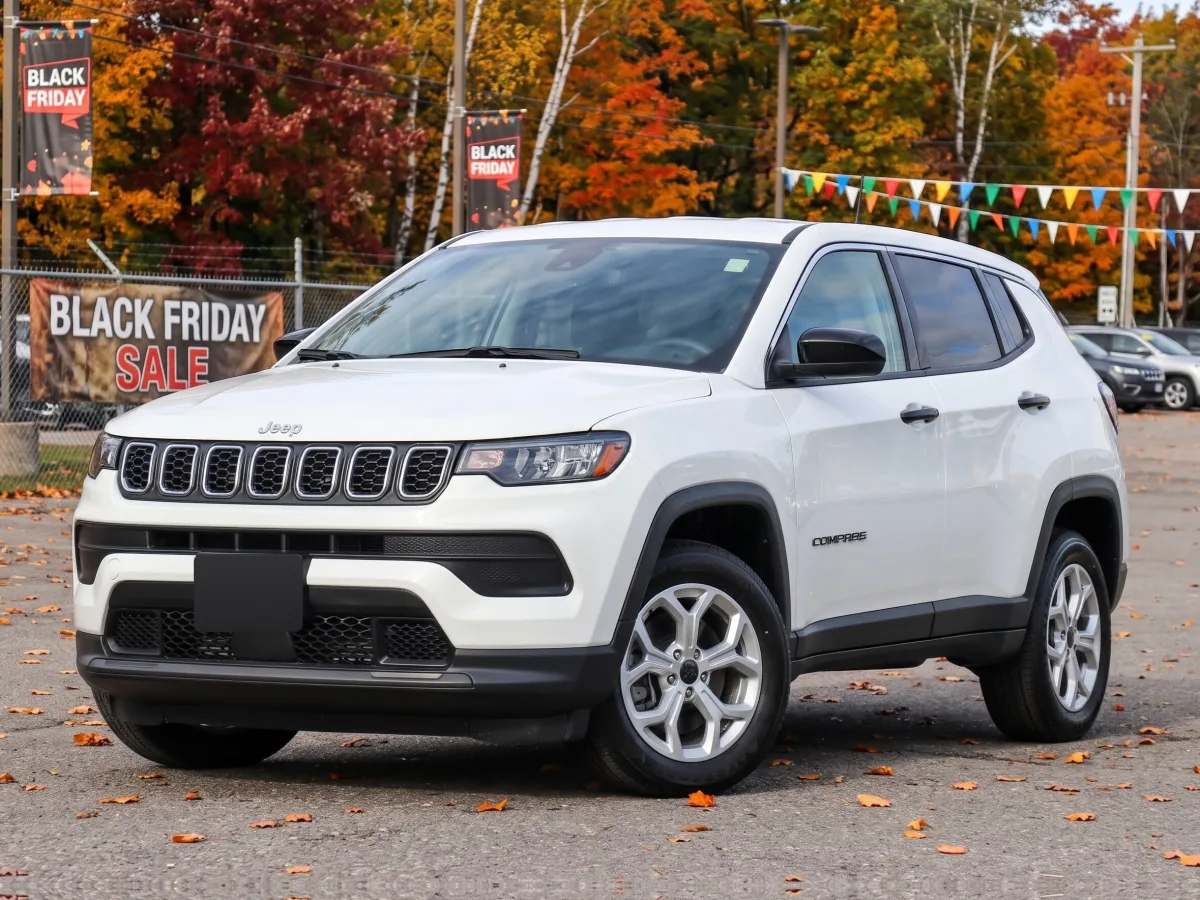
2026 Jeep Compass Sport 4x4 DEMO
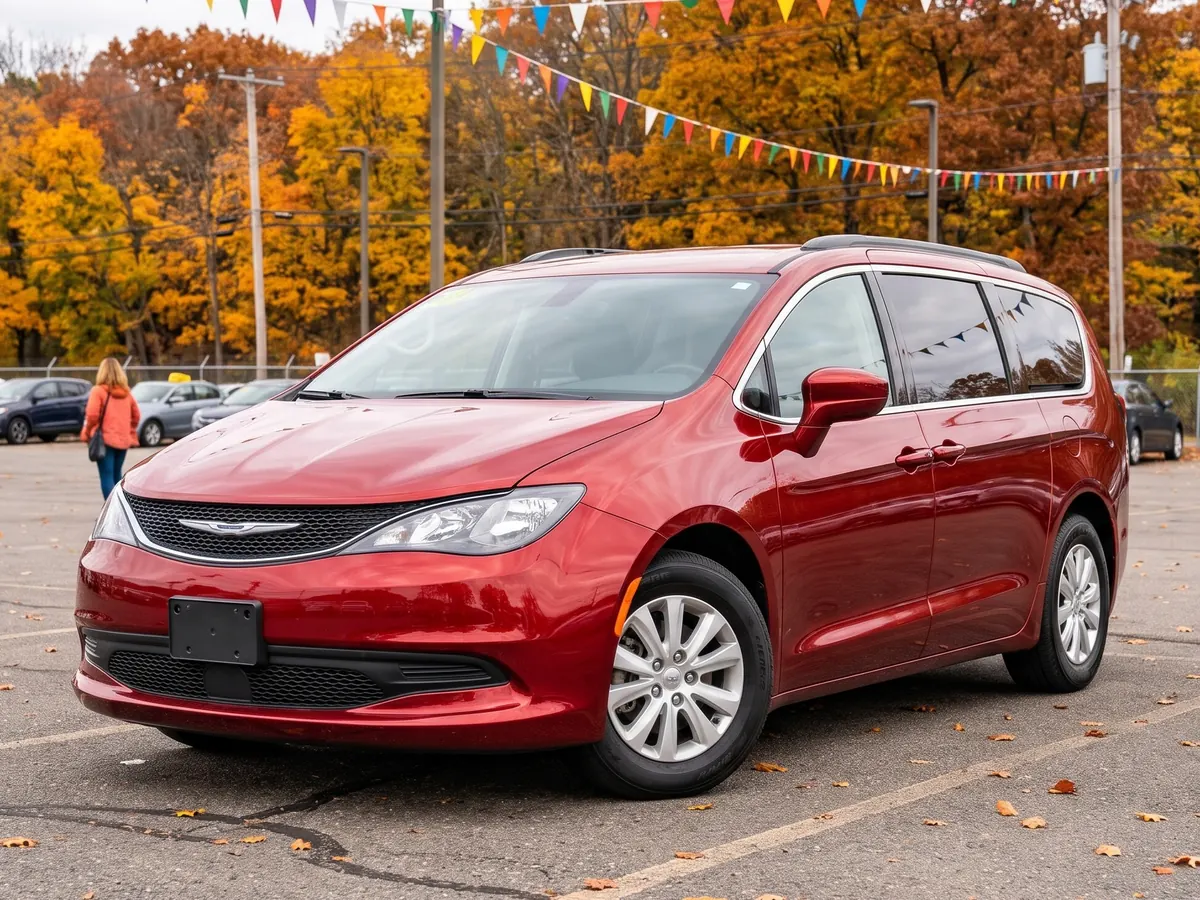
2026 Chrysler Grand Caravan SXT DEMO
A note on this month's offers. The CDD6 program is running finance offers only for November 2026 — there are no advertised lease specials in this cycle. Leasing remains available on everything Golden Mile Chrysler stocks; the terms are simply quoted directly rather than advertised as a special. Call 437-524-1747 and we will price it either way so you can compare.
Advertised weekly prices are all-in (freight, PDI, admin & OMVIC fees included); only HST and licensing are extra. On approved credit (OAC). Not all lessees or buyers will qualify — see dealer for eligibility. Vehicles subject to prior sale; see each deal page for full disclosure. E.&O.E. Call 437-524-1747.
See all of this month's deals Black Friday Used Car Sale: on until November 30, 2026 →
Talk to the Car Doctor
Straight answers, no games, no runaround. The line is open.
437-524-1747