
Road Trip Checklist: A Long Drive with Kids and Older Parents

By Navin Kotecha, The Car Doctor
Published
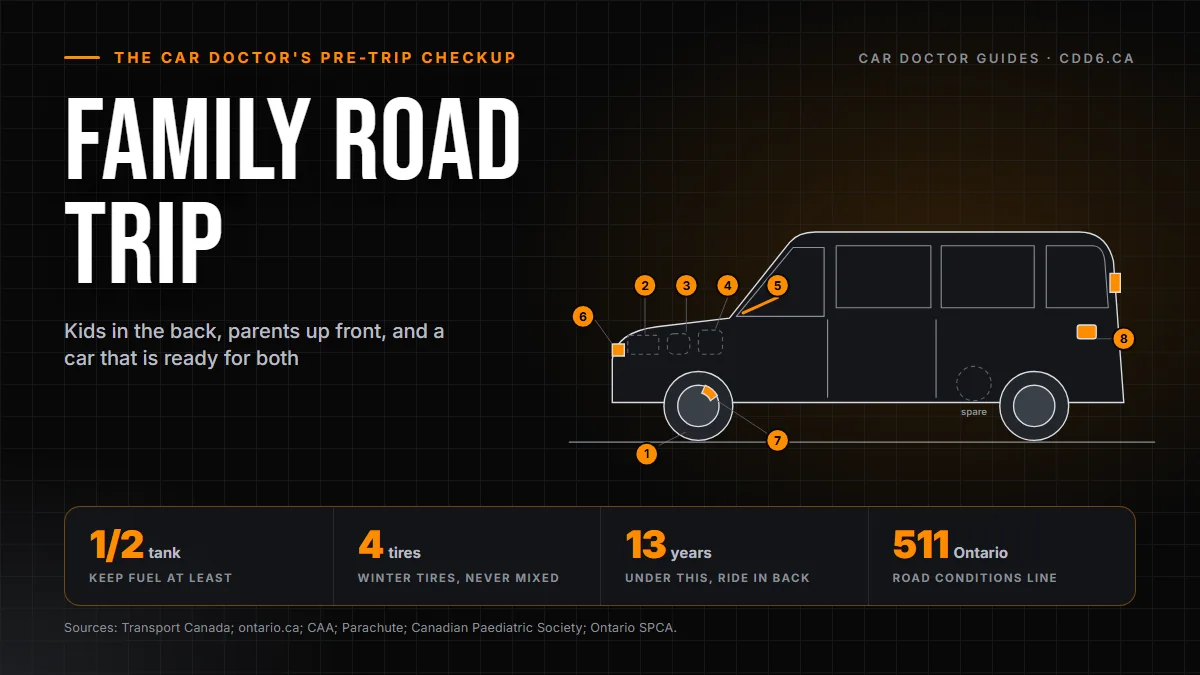
Before a long drive with kids and older parents, check the tires (spare included), fluids, wipers, lights and battery, pack a winter kit, and make sure car seats fit snugly with no puffy coats. Keep everyone's medications in labelled containers with extras, plan regular rest stops, check Ontario 511, and never leave a child or pet alone in the car.
Three generations in one vehicle for four hours up the 400 or along the 401 is a lot of people depending on one driver and one machine. Here is the checkup I would run before anyone buckles in.
What should you check on the car before a long drive?
Do these a few days before you leave, so there is time to fix whatever turns up. Tire makers say to check pressure, including the spare, once a month and again before any long trip, with the tires cold. Our guide to correct tire pressure shows where your number is. CAA and CAA South Central Ontario cover the rest of the list below.
The pre-trip walk-around
- Tires, spare includedCheck the pressure when they are cold. In winter, four winter tires, never a mixed set.
- BatteryCold makes it work harder; have it tested before winter.
- CoolantIt should suit cold-weather temperatures.
- Washer fluidTop it up and carry extra.
- Wiper bladesReplace them if they streak or show rust.
- LightsMake sure every light works and the headlights are aimed properly.
- BrakesSquealing, grinding or a different feel means they need service.
- FuelKeep the tank at least half full in winter.
Where the battery and reservoirs sit varies by vehicle; your owner's manual shows yours. Simplified drawing; the layout differs between vehicles.
Source: CAA: winter car care, CAA South Central Ontario winter driving tips, Ontario: winter driving, Transport Canada: planning your trip, US Tire Manufacturers Association_1.pdf) and Bridgestone.
| Check | What to look for | Where to learn more |
|---|---|---|
| Tires and pressure | Set to the door-label pressure when cold; don't forget the spare | Correct tire pressure guide |
| Battery | Cold makes a battery work harder and saps its power, so have an older battery tested before you go | CAA; CAA South Central Ontario |
| Fluids | Coolant suited to winter temperatures, plus a full washer reservoir and a spare jug | Types of car fluids guide |
| Wipers | Streaking or rusted blades mean it is time for new ones | How to change wiper blades guide |
| Lights | Every exterior and interior light works, and the headlights are aimed properly | CAA; CAA South Central Ontario |
| Brakes | Squealing, grinding or a change in pedal feel means book a service before the trip | CAA; CAA South Central Ontario |
| Fuel | Keep the tank at least half full in winter | Ontario.ca; CAA; Transport Canada |
Source: U.S. Tire Manufacturers Association_1.pdf) and Bridgestone (pressure before long trips); CAA, Winter Car Care; CAA South Central Ontario, Winter Driving Tips; Ontario.ca, Winter driving; Transport Canada, Planning your trip.
Not sure what each reservoir under the hood does? Our guide to types of car fluids walks through them, and how to change wiper blades takes about ten minutes in the driveway. On winter tires, the Ontario government and CAA South Central Ontario give the same rule: fit a set of four, never two and never a mix.
What goes in a winter emergency kit for Ontario?
The Ontario government, CAA and Transport Canada each publish a car kit list. They overlap a lot, and the table below shows every item that appears on at least two of them. Keep it in the trunk from November to April, and put the phone charger, flashlight and blanket where you can reach them from a seat.
| Item | Ontario.ca | CAA | Transport Canada |
|---|---|---|---|
| Charged phone and charging cable | Yes | — | Yes |
| Water and non-perishable food | Yes | Yes | Yes |
| Flashlight | Yes | Yes | Yes |
| Blanket and warm clothes, socks, gloves | Yes | Yes | Yes |
| Booster (jumper) cables | Yes | Yes | Yes |
| Shovel | Yes | Yes | Yes |
| Sand, kitty litter or traction mats | Yes | Yes | Yes |
| Ice scraper and snow brush | Yes | Yes | Yes |
| Windshield washer fluid | Yes | Yes | Yes |
| Candle with matches or a lighter | Yes | — | Yes |
| First aid kit | — | Yes | Yes |
| Reflective triangles or flares | — | Yes | Yes |
| Fuel-line antifreeze | — | Yes | Yes |
| Hand and foot warmers | — | Yes | Yes |
Source: Ontario.ca, Winter driving; CAA, Emergency Kit; Transport Canada, Planning your trip and Winter Driving Emergency Kit.
If you do get stuck in a storm, Transport Canada and CAA agree on the basics. Stay inside the vehicle if it is not at risk of being hit. Make sure the tailpipe is clear of snow so exhaust can't build up inside, open a window a crack, and run the engine only in short spells. Skip the heavy shovelling and pushing, and stay awake.

How do you keep kids safe in their car seats on a long drive?
Children under 13 are safest in the back seat, according to both Parachute and the Canadian Paediatric Society. Before a road trip, recheck the install with our guide on how to install a car seat.
The Ontario winter catch: no bulky coats or snowsuits under the harness. A puffy jacket keeps the straps from sitting tight against the child, a warning that Parachute, the Canadian Paediatric Society and Transport Canada all repeat. Dress kids in thinner layers like a fleece and a hat, buckle them in snugly, then tuck a blanket over the top. Retighten the straps every time they get back in after a stop.
Why should you never leave a child or a pet in the parked car?
Because a closed car heats up fast, even on a day that feels mild, and a cracked window does little to stop it. Transport Canada is clear that a child should never be left by themselves in a vehicle, whatever the weather, and Parachute warns children have been hurt and killed in both hot and cold cars. If a little one falls asleep on the way, take them out when you stop rather than letting them nap in the seat. Both groups suggest putting your phone or purse on the rear seat, so you have to turn around and look before you lock up.
The same goes for the dog. The Ontario SPCA, the Toronto Humane Society and the City of Toronto all say not to leave a pet in a parked car even briefly. If your pet can't come inside at a stop, the Ontario SPCA's advice is to leave them home.
How often should you stop, and how do you know you're too tired?
Get a proper night's sleep before you leave and, where you can, drive in daylight; Transport Canada and the Traffic Injury Research Foundation both recommend it. On how often to stop, the advice varies: Transport Canada's current road safety brochure says every 90 minutes, while an older Transport Canada report said every couple of hours. With kids and grandparents on board, you will want the 90-minute stops anyway.
On the road
Never leave a child
Not even for a minute, hot day or cold. Take a sleeping child with you.
Or the dog
A parked car heats up fast, and a cracked window does not stop it.
Know the signs
Frequent yawning or drifting out of your lane means it is time to stop and nap.
Check Ontario 511
At ontario.ca/511 or by dialling 511, before you go.
Know the warning signs. Frequent yawning and drifting out of your lane are on both the Transport Canada and TIRF lists. If you notice them, pull over somewhere safe and take a nap, or hand the keys to another driver.
What do older passengers need for the trip?
Medications first. The Government of Canada's travel advice and the Canadian Pharmacists Association give the same habits, written for travel abroad but just as sensible on Highway 11: keep each medication in its original labelled container, carry a written list with the generic name, strength and dose (a pharmacist can print one), and pack extra in case you get delayed. Keep them in the cabin with you, not buried in the trunk.
Mind the temperature, too. Health Canada and the travel.gc.ca page for older travellers both note that older adults face more risk from heat, partly because some medications interfere with how the body cools itself. Keep water within reach and the cabin comfortable, and ask passengers in the back how they're doing rather than going by the front-seat thermostat.
Where do you check Ontario road conditions?
The official service is Ontario 511. The Ontario government points drivers to it on the web at ontario.ca/511 or by dialling 511 hands-free, and the Ontario 511 site offers a free app showing construction, closures, highway cameras and where the snowplows are. Check the forecast too, and if a storm is coming, push the trip back if you can; Ontario and Transport Canada both say so.
What emergency information should you have on hand?
Keep phones charged with a cable in the car, and know your roadside assistance number, whether that is CAA, the plan that came with your vehicle or your insurer's. If you break down, get onto the shoulder, turn on the hazards, and if you have to get out, use the door away from traffic; CAA South Central Ontario and Consumer Reports both say to keep well clear of moving cars. In an emergency, call 911. Tuck a copy of each passenger's medication list in the glovebox as well.
Has the family outgrown the car? Our minivan comparison lines up the vans built for exactly this kind of trip. Every CDD6 deal at Golden Mile Chrysler comes with a lifetime oil change*, a gas card and two years of free tire storage.
Family Road Trips: Common Questions
What should I check on my car before a long road trip?
Check tire pressure on all four tires and the spare while they are cold, top up fluids including washer fluid, look for streaking wiper blades, make sure every light works, and have an older battery tested. Book a brake check if they squeal or grind, and keep the tank at least half full in winter.
What should be in a winter car emergency kit in Ontario?
The Ontario government, CAA and Transport Canada lists all include water and non-perishable food, a flashlight, a blanket and warm clothes, booster cables, a shovel, sand or traction mats, an ice scraper and washer fluid. Add a charged phone with a cable, a first aid kit and reflective triangles.
How often should I stop on a long drive?
Transport Canada's current road safety brochure says to stop every 90 minutes, while an older Transport Canada report suggested every couple of hours. Sleep well before you go, drive in daylight where you can, and pull over for a nap if you start yawning a lot or drifting in your lane.
Can my child wear a winter coat in a car seat?
Not a bulky one. Parachute, the Canadian Paediatric Society and Transport Canada all warn that puffy coats and snowsuits stop the harness from fitting snugly. Dress your child in thinner layers, tighten the straps, and lay a blanket over the top once they are buckled in.
Is it ever safe to leave a child or pet in a parked car?
No. Transport Canada says a child should never be left by themselves in a vehicle, and Parachute notes children have been harmed in both hot and cold cars. The Ontario SPCA, Toronto Humane Society and City of Toronto give the same advice for pets, even for a short stop.
How should older passengers pack their medications for a road trip?
Keep each medication in its original labelled container, bring a written list with generic names, strengths and doses, and pack extra in case of delays, as the Government of Canada and the Canadian Pharmacists Association advise. Keep them with you in the cabin rather than in the trunk.
How do I check road conditions in Ontario?
Use Ontario 511, the province's official traveller information service. You can visit ontario.ca/511, dial 511 hands-free, or use the free Ontario 511 app, which shows construction, closures, highway cameras and snowplow locations. Check the weather forecast as well before you leave.
See this month's deals, every one with a lifetime oil change
Talk to the Car Doctor
Straight answers, no games, no runaround. The line is open.
437-524-1747