
Winter Car Emergency Kit: What to Keep in Your Car in Ontario, and What to Do If You Get Stuck

By Navin Kotecha, The Car Doctor
Published
A winter car emergency kit for Ontario needs four kinds of things: gear to keep you warm (blanket, spare socks, gloves and a hat, hand warmers), gear to get you unstuck (shovel, sand or kitty litter, traction mats, booster cables), gear so others can see you (flashlight, reflective triangles or flares) and gear to call for help (a charged phone and its cable). Add water, snacks that won't spoil and a first-aid kit. If you do get stuck, stay in the car, keep the tailpipe clear of snow and run the engine only in short spells.
Our family road trip checklist is about getting the car and the passengers ready for a long drive. This guide is about the box in the back and the hours you might spend waiting beside a snowbank. You don't need a trip to Muskoka for that to happen. A whiteout on the 400, a closure on the 401 or a slide into the ditch on a dark side road can do it in the middle of an ordinary commute.
What should be in a winter car emergency kit in Ontario?
I went through the lists from the Government of Ontario, the MTO Driver's Handbook, Transport Canada, Public Safety Canada's Get Prepared car kit, CAA and the Canadian Centre for Occupational Health and Safety. Everything below shows up on at least two of them. Most of it is already in your house: a spare blanket, old boots, the shovel from the garage.
| Item | What it's for | Recommended by |
|---|---|---|
| Charged phone and charging cable | Calling for help, and keeping the battery alive while you wait | Ontario.ca, Transport Canada, CAA South Central Ontario |
| Water and snacks that won't spoil | Granola or energy bars and bottled water in case you wait for hours | Ontario.ca, MTO handbook, Get Prepared, CAA, Transport Canada |
| Blanket | The main way to stay warm without burning fuel | Ontario.ca, MTO handbook, Get Prepared, CAA, Transport Canada |
| Extra socks, gloves, hat and boots | Dry layers to swap in if you get wet digging out | Ontario.ca, MTO handbook, CAA, Transport Canada, CCOHS |
| Hand and foot warmers | Warmth for your hands and feet while the engine is off | CAA, Transport Canada, CCOHS |
| Flashlight (wind-up, or with spare batteries) | Seeing the tailpipe, the shoulder and the kit after dark | Ontario.ca, Get Prepared, CAA, CCOHS |
| Reflective triangles, flares or a warning light | So other drivers and plows can see you | Get Prepared, CAA, Transport Canada, CCOHS |
| Small shovel with a long handle | Clearing the tailpipe and the wheels | Ontario.ca, MTO handbook, CAA, Transport Canada |
| Sand, kitty litter or traction mats | Grip under the drive wheels | Ontario.ca, Get Prepared, CAA, Transport Canada |
| Booster cables | A dead battery in the cold | Ontario.ca, Get Prepared, CAA, Transport Canada |
| Ice scraper and snow brush | Clearing every window, light and the roof before you drive | Ontario.ca, Get Prepared, CAA, Transport Canada |
| Extra winter washer fluid | Keeping the windshield clear on a long, slushy drive | Ontario.ca, Get Prepared, CAA, Transport Canada |
| First-aid kit | Cuts and scrapes while you wait for help | Get Prepared, CAA, Transport Canada, CCOHS |
| Candle in a deep can, with matches or a lighter | A little light, and warmth for your hands | Ontario.ca, Get Prepared, CAA South Central Ontario |
| Fuel line antifreeze | Moisture in the fuel line can freeze in deep cold | CAA, Transport Canada, CCOHS |
| Small tool kit, spare fuses and paper towels | Small roadside fixes, and wiping off lights | CAA, Transport Canada |
| Tow rope | So a helper can pull you out | Get Prepared, CCOHS |
| Fire extinguisher | Putting out a small fire | Get Prepared, Transport Canada |
| Seatbelt cutter and window hammer | Cutting a jammed belt or breaking a window to get out | Get Prepared, Transport Canada |
| Bright cloth | Tied to the antenna or a door handle to flag your car | CCOHS, CAA South Central Ontario |
Source: Ontario.ca, Winter driving; MTO Driver's Handbook, Driving at night and in bad weather; Get Prepared, Emergency car kit; CAA, Emergency Kit; Transport Canada, Planning your trip; CCOHS, Driving in winter; CAA South Central Ontario, Winter Driving Tips and Stranded Driver.
Two notes on the list. For the flashlight, CAA and Get Prepared both point to a wind-up model, and CAA South Central Ontario and CCOHS say to pack spare batteries if yours takes them. For washer fluid, the Ontario government and CAA both say to buy one rated for -40 °C.
What goes in the cabin and what goes in the trunk?
Transport Canada and Get Prepared split the kit the same way. The bulky, rarely used gear rides in the trunk. The things you need fast, or need while sitting in the seat, stay inside the car. If you end up nose-first in a drift with the trunk buried, you will be glad the blanket is behind your seat and not under three feet of snow.
Where each part of the kit lives
Within reach of a seat
Flashlight, first-aid kit, blankets, ice scraper and snow brush, seatbelt cutter and window hammer.
On you
A charged phone and the cable to keep it that way.
In the trunk
Shovel, sand or kitty litter, traction mats, booster cables, extra washer fluid, fuel line antifreeze and the tow rope.
Also in the trunk
Reflective triangles, flares or a warning light, plus the fire extinguisher.
Pack the trunk so the kit never blocks the spare. If you are not sure where yours is, our guide on where the spare tire is shows the usual spots.
What should you do if you get stuck in the snow?
Stay calm and stay with the car. The MTO Driver's Handbook, Transport Canada, Get Prepared and CCOHS all give the same advice: the vehicle is your shelter, and walking off into blowing snow is how people get lost. The one exception, from Transport Canada and CAA South Central Ontario, is a car that could be hit by other traffic. Then get out only if there is a safer spot away from the road to go to.
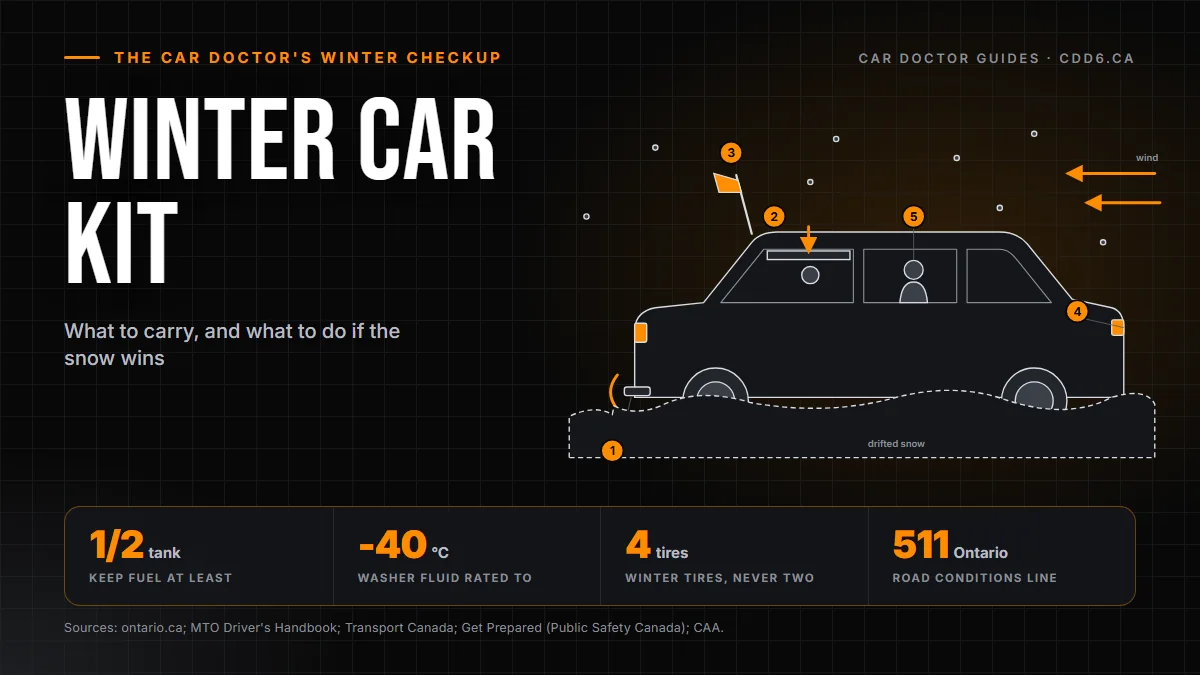
Stuck in a drift: the five things to set up
- Tailpipe dug clearCheck it before you run the engine, and again as snow keeps falling.
- Window open a crackOn the side away from the wind, for fresh air.
- Bright clothTied to the antenna or a door handle so searchers spot you.
- Hazard lights onPlus flares or triangles if you can set them out safely.
- Everyone stays insideHat on, blankets on, arms and legs moving.
An SUV stuck in drifted snow, with the wind coming from the right. Simplified drawing; the layout differs between vehicles.
Source: Transport Canada, Planning your trip; MTO Driver's Handbook; CCOHS, Driving in winter; CAA, Safe Winter Driving Tips; CAA South Central Ontario, Stranded Driver.
Waiting it out, step by step
Call for help
Call 911 in an emergency, or your roadside assistance. Tell them where you are as precisely as you can.
Make the car easy to spot
Hazard lights on, flares or triangles out if it is safe to place them, and a bright cloth on the antenna or door handle.
Clear the tailpipe
Dig the snow away from the exhaust before you start the engine. A blocked pipe can push exhaust into the cabin.
Crack a window
Open one a little on the side sheltered from the wind so fresh air keeps coming in.
Run the engine sparingly
Run it for short spells to warm up, then shut it off. That saves fuel and limits exhaust.
Keep warm without fuel
Hat on, blankets shared, hand and foot warmers, and move your arms and legs often.
Stay awake and watch
Don't doze off, and keep an eye out for traffic and searchers.
What not to do: don't try to shovel hard or push the car out on your own. Transport Canada, CAA and CCOHS all warn against heavy work in the bitter cold.
Why does a blocked tailpipe matter so much?
Because exhaust carries carbon monoxide. When snow packs in around the tailpipe of a running car, the exhaust has nowhere to go and can seep into the cabin, which is why CAA, Transport Canada, Get Prepared and CCOHS all put the tailpipe first. In a storm, snow keeps drifting in, so check it again each time before you restart. CAA South Central Ontario also warns against leaving the engine running for long stretches while you wait.
A leaky exhaust system is the other risk, and it is one you can deal with in the fall. CAA, the MTO handbook and CCOHS all say to have the exhaust checked for leaks before winter.

What if you break down on a busy highway instead?
A breakdown on the 401 or the DVP is a different problem: the danger is traffic, not cold. Pull onto the shoulder as far as you can and put the hazards on. If you have to get out, the MTO handbook and CAA South Central Ontario both say to use the door on the side away from traffic. If someone stops to help, the handbook suggests asking them to call the police or your auto club for you, and staying in the car until help arrives. If the car won't start once you're off the road, our guide on moving a car that won't start covers getting it out of Park.
What should you check before winter and before a long drive?
Every fall
Test the battery
Cold makes it work harder. CAA and CAA South Central Ontario both say to have it tested before winter.
Four winter tires
A full set, never two. See our winter tires guide.
Fluids
Coolant suited to cold weather, and washer fluid rated for -40 °C.
Exhaust
Have it checked for leaks, for the carbon monoxide reasons above.
Half a tank, minimum
It cuts condensation in the fuel system and leaves fuel to run the heater if you get stuck.
Go through the kit
Restock what you used last winter and swap the snacks and water for fresh ones.
Before any long winter drive, check the forecast and Ontario 511 (or dial 511 hands-free), and hold off if a storm is on the way, as Ontario and Transport Canada both advise. Tell someone your route and when you expect to arrive; Transport Canada and CCOHS both recommend it, so someone knows where to start looking. Charge the phone, and clear snow off every window, the lights and the roof before you pull out. For tire pressure in the cold, see our tire pressure guide, and for what each reservoir under the hood holds, see types of car fluids.
Buying from us? Every CDD6 deal at Golden Mile Chrysler comes with a lifetime oil change*, a gas card and two years of free tire storage, so your winter tires have somewhere to live all summer.
Winter Car Emergency Kits: Common Questions
What should I keep in my car for winter in Ontario?
Pack a blanket, extra socks, gloves and a hat, water and snacks that won't spoil, a flashlight, a first-aid kit, a small shovel, sand or kitty litter, booster cables, an ice scraper and brush, extra winter washer fluid, reflective triangles or flares, and a charged phone with its cable. Ontario, Transport Canada, Get Prepared and CAA all list these.
Should I stay in my car if I get stuck in the snow?
Yes, in most cases. The MTO Driver's Handbook, Transport Canada and Get Prepared all say to stay with the vehicle, because it is your shelter and blowing snow makes it easy to get lost. The exception is a car at risk of being hit by traffic: then move only if there is a safer spot away from the road.
How do I avoid carbon monoxide if my car is stuck in snow?
Dig the snow away from the tailpipe before you start the engine and check it again while you wait, open a window a crack on the side away from the wind, and run the engine only in short spells. Transport Canada, CAA and CCOHS all give this advice.
Should I keep the engine running to stay warm?
Only for short periods. The MTO handbook says to run the motor sparingly, and Transport Canada says to run it as little as possible. Use blankets, a hat and hand and foot warmers for most of the warmth, and always check that the tailpipe is clear first.
Where should I keep my winter emergency kit?
Split it. Transport Canada and Get Prepared both suggest keeping the shovel, traction aids, booster cables, extra fluids, flares and fire extinguisher in the trunk, and the flashlight, first-aid kit, blankets and ice scraper inside the car where you can reach them from a seat.
How do I check road conditions in Ontario before I drive?
Use Ontario 511, on the web at ontario.ca/511 or by dialling 511 hands-free. It shows road conditions and where the plows are on provincial highways. Check the weather forecast too, and delay the trip if a storm is coming.
See this month's deals, every one with a lifetime oil change
This Month's Deals at Golden Mile Chrysler
November 2026 · All-in weekly finance pricing — tap a deal for full details.
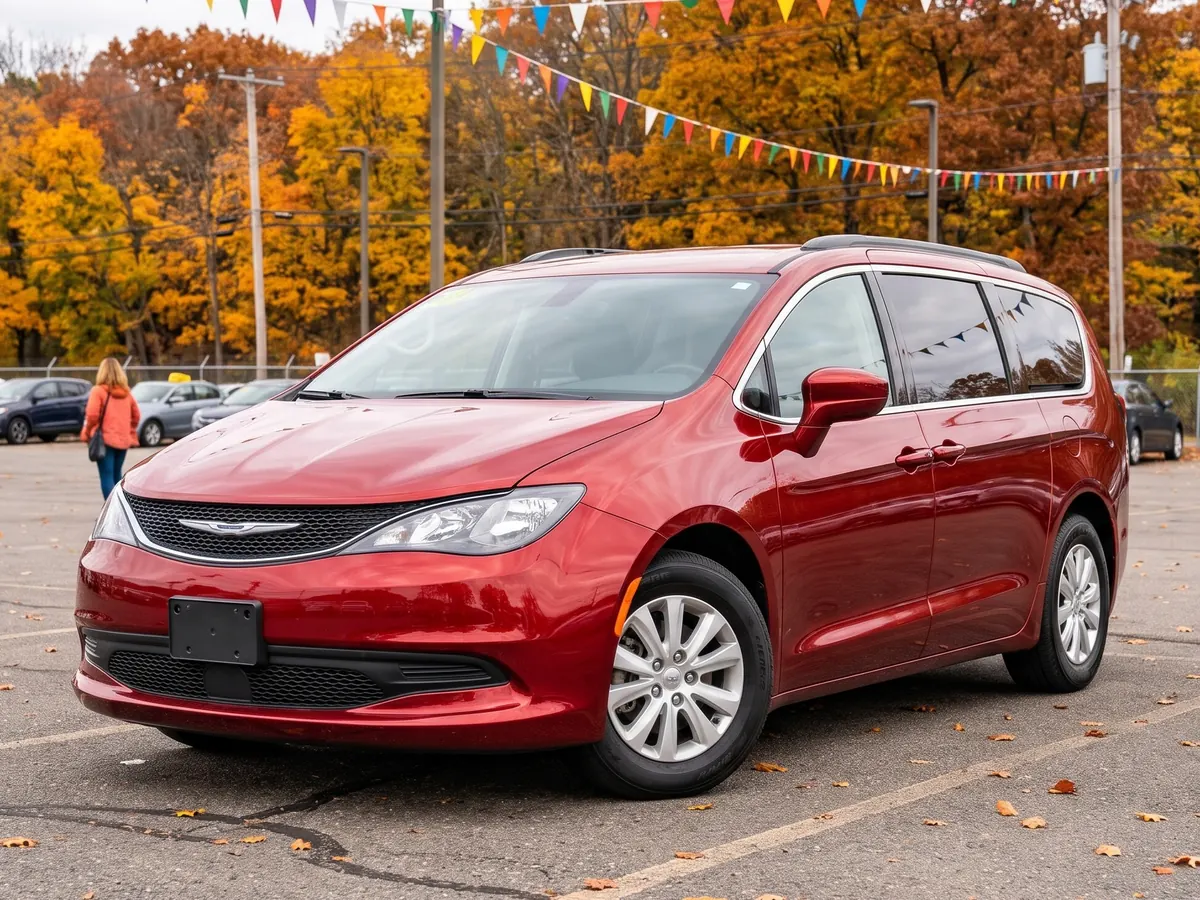
2026 Chrysler Grand Caravan SXT DEMO
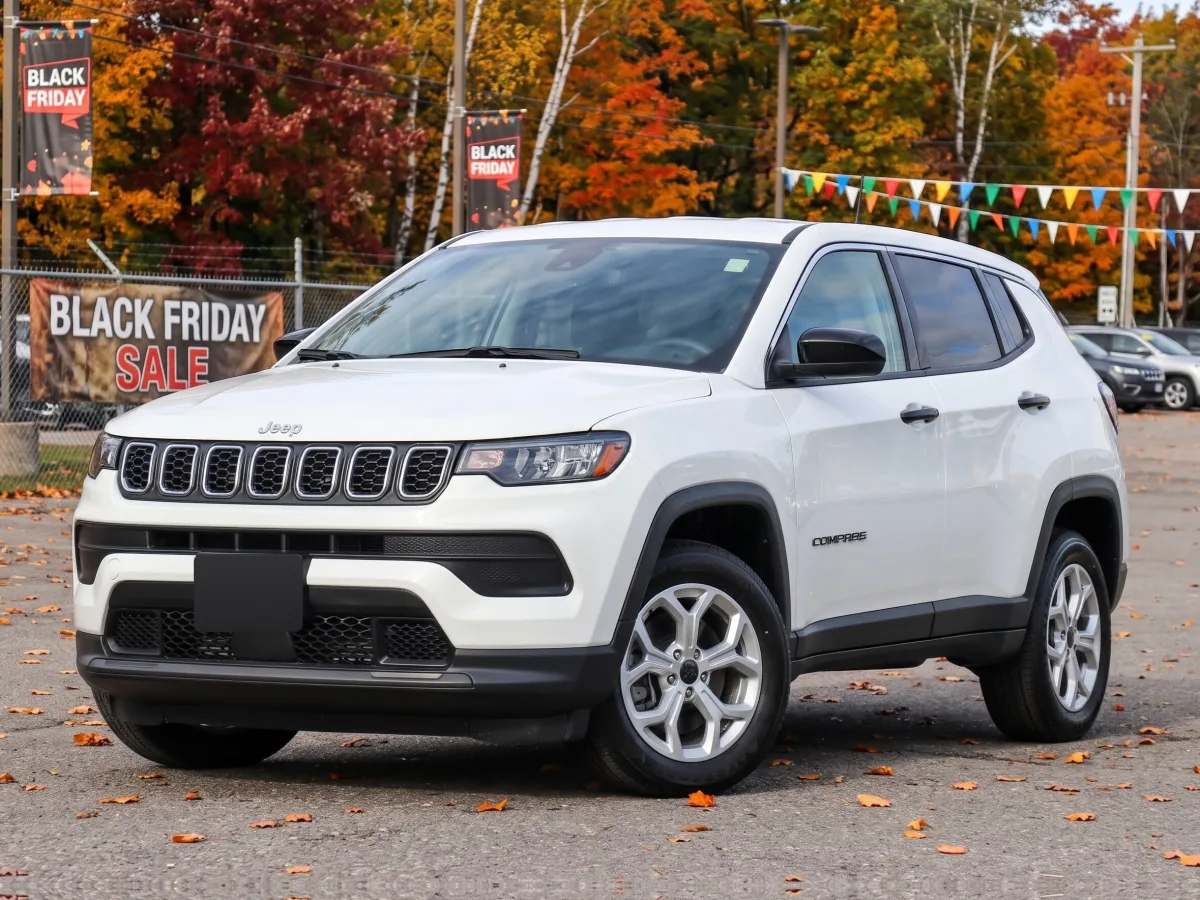
2026 Jeep Compass Sport 4x4 DEMO
A note on this month's offers. The CDD6 program is running finance offers only for November 2026 — there are no advertised lease specials in this cycle. Leasing remains available on everything Golden Mile Chrysler stocks; the terms are simply quoted directly rather than advertised as a special. Call 437-524-1747 and we will price it either way so you can compare.
Advertised weekly prices are all-in (freight, PDI, admin & OMVIC fees included); only HST and licensing are extra. On approved credit (OAC). Not all lessees or buyers will qualify — see dealer for eligibility. Vehicles subject to prior sale; see each deal page for full disclosure. E.&O.E. Call 437-524-1747.
See all of this month's deals Black Friday Used Car Sale: on until November 30, 2026 →
Talk to the Car Doctor
Straight answers, no games, no runaround. The line is open.
437-524-1747